A remarkable natural landscape on Dublin’s doorstep.
From Scribblestown Lane and Dunsinea Lane to Dunsink and Tolka Valley Park, this landscape contains a valuable network of trees, hedgerows, meadows, waterways and green spaces that provide habitats for wildlife.
These natural areas are more than beautiful surroundings. They support biodiversity, connect wildlife habitats and form an important part of our local natural heritage.
Our wildlife deserves to be recognised, celebrated and protected.
Gerry Creighton
“What stands out to me is that this is not about protecting one tree, one hedgerow or one species. This is a complete and functioning ecological corridor made up of the River Tolka, floodplain grasslands, mature hedgerows, veteran trees, woodland, streams, old agricultural buildings and long-established wildlife routes,” Mr Creighton stated “The mature hedgerows and veteran trees are particularly important. They provide nesting and roosting habitat, movement routes for wildlife, feeding areas for pollinators, carbon storage and natural flood protection. These are habitats that have developed over many decades, and in some cases much longer,” he said.
“Scribblestown Lane also has considerable historic and cultural value, with its traditional landscape, old agricultural buildings, historic boundaries and the heritage stone bridge known locally as the ‘Stick Bridge’. Once landscapes like this are lost or fragmented, they are extremely difficult, if not impossible, to recreate.” You can read the full article here.
Discover Our Wildlife
🦇 Bats
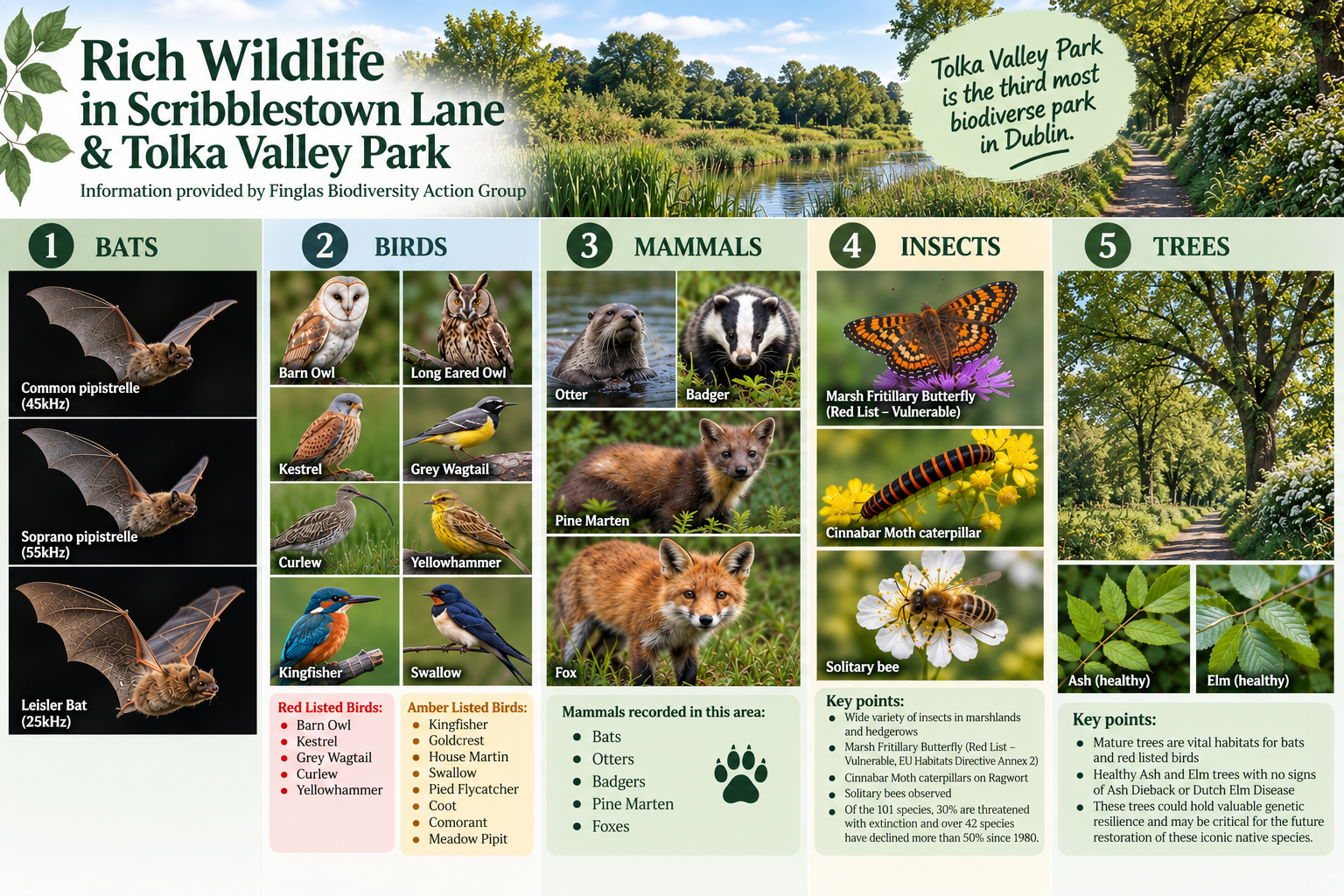
Common pipistrelles, soprano pipistrelles and Leisler’s bats are examples of bat species associated with the wider Dublin landscape. Bats feed on insects and need suitable roosts, mature trees and connected, dark habitats.
🦉 Birds
The area's varied habitats can support a diverse range of birds. Species associated with local waterways, grassland and green spaces include kingfishers, grey wagtails, kestrels, swallows and owls.
🦊 Mammals
Foxes, badgers, otters, hedgehogs and pine martens are examples of mammals associated with different Irish habitats. Connected green spaces, hedgerows and waterways can provide important routes for movement, feeding and shelter.
🦋 Insects & Pollinators
Bees, butterflies, moths and other insects are essential to healthy ecosystems. Wildflowers, meadows and hedgerows provide nectar, pollen, food and shelter for these often-overlooked species.
🌳 Trees & Plants
Mature trees, native vegetation, established hedgerows and wildflowers provide essential food and shelter for wildlife. They also help maintain the character and ecological value of the local landscape.
Species records should be checked against reliable local sightings and ecological surveys before individual species are described as confirmed at a particular site.
Habitats Worth Protecting
Scribblestown & Scribblestown Lane
Trees, hedgerows, grassland and surrounding green spaces can provide valuable habitats and connections for wildlife. Protecting these features helps preserve the area's natural character and ecological network.
Dunsinea Lane
Dunsinea Lane forms part of a landscape of natural and historic interest. Its hedgerows, mature vegetation and links to nearby green spaces deserve careful consideration in planning decisions.
Why Biodiversity Matters
Healthy ecosystems support both wildlife and people. They contribute to pollination, clean air and water, climate resilience and the wellbeing of our communities.
Trees, hedgerows, meadows and waterways work together as a living network. When these habitats are damaged or disconnected, wildlife can lose the places it needs to feed, shelter and breed.
Protecting biodiversity means looking beyond individual parks and considering the wider landscape as a whole..
Nature Needs Space to Thrive
Scribblestown, Scribblestown Lane, Dunsinea Lane, Dunsink and Tolka Valley Park are part of a wider natural landscape worth protecting. You can read the full Finglas Biodiversity Action Group submission here.
Celebrate our wildlife. Protect our habitats. Keep our green corridors connected.
Our natural heritage is a living legacy. Let’s protect it for future generations.