Dunsink Landfill: History, Environmental Concerns and Our Concerns
A Legacy That Must Be Properly Investigated
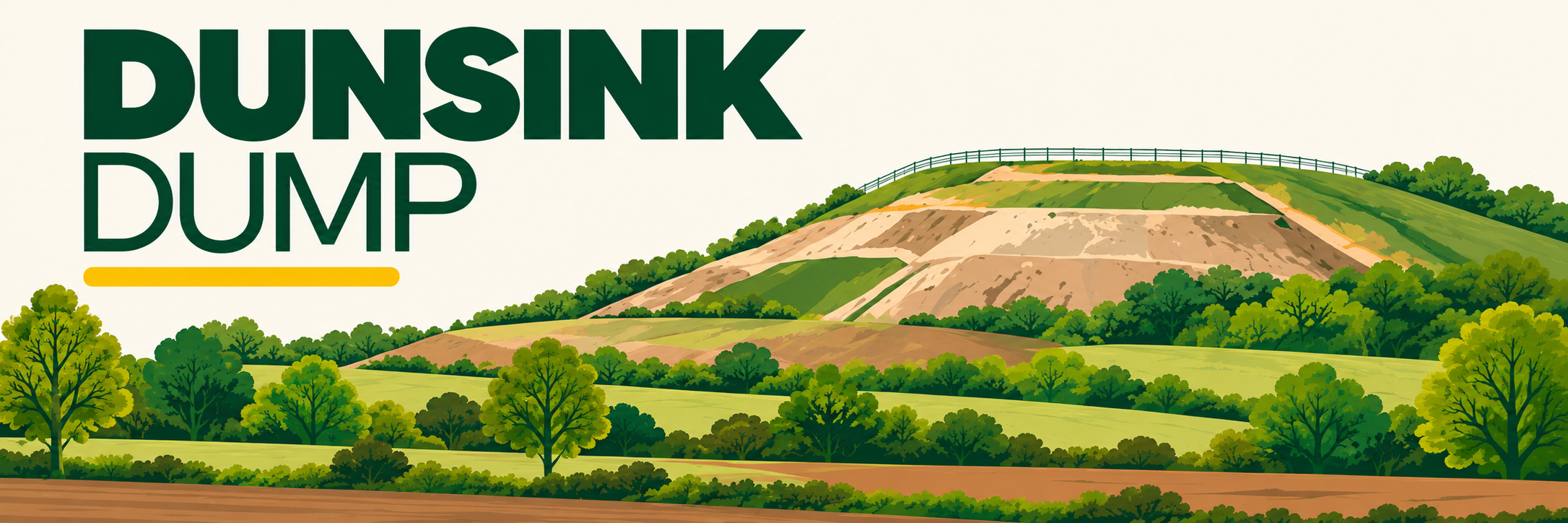
Dunsink Landfill is a former municipal waste site on the outskirts of Finglas, now entering its long-term restoration and aftercare phase. Although the landfill is closed, its environmental legacy remains an important consideration as Fingal County Council advances plans to develop a new urban community in Dunsink.
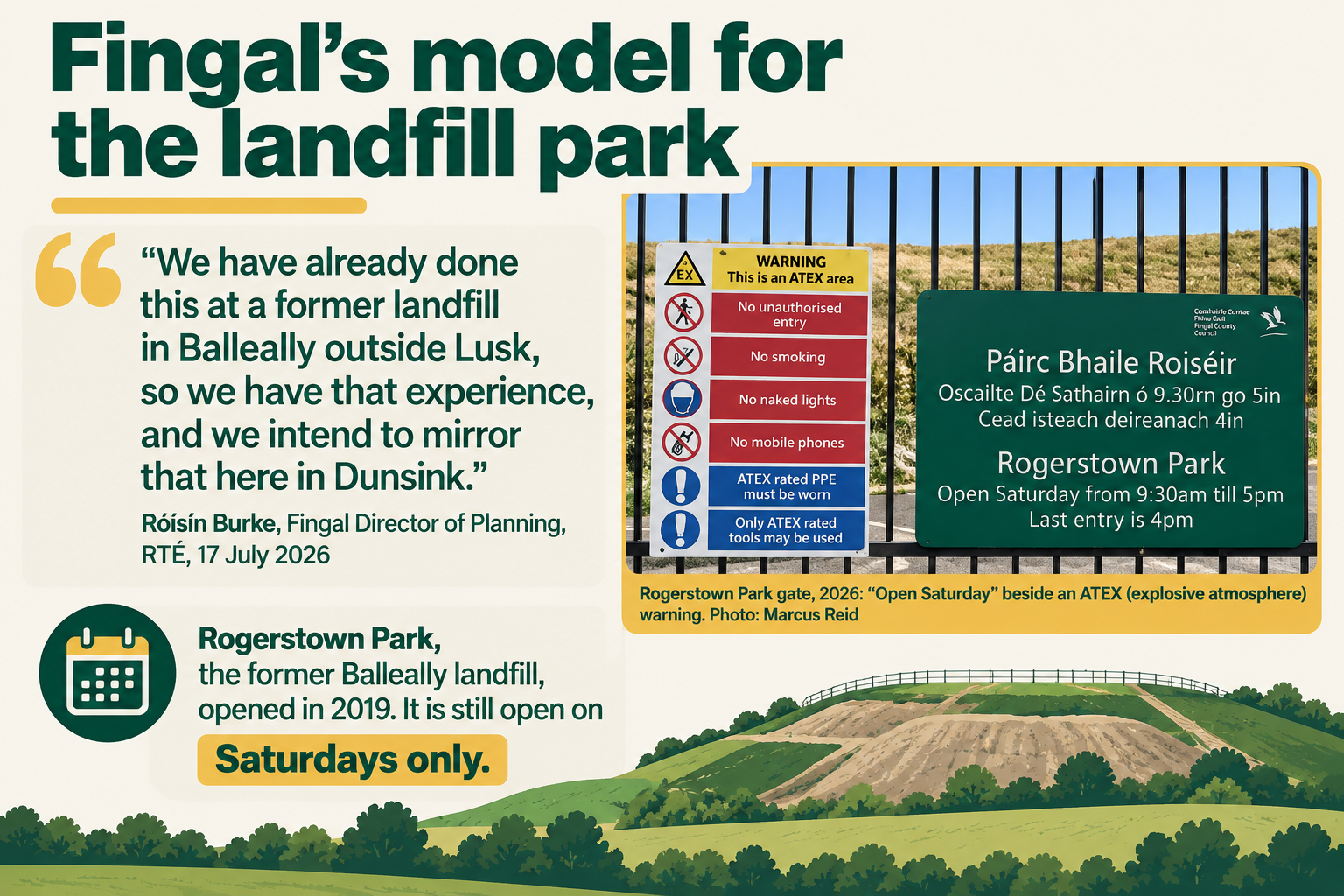
The former landfill is proposed as part of a new regional park and recreational hub. However, before this land is opened for public use or its surroundings are developed, residents need clear, accessible information about its history, environmental condition and long-term safety.
Our position is simple: the landfill must be independently assessed, its environmental risks made transparent, and the necessary safeguards put in place before decisions are made about its future use. A good submission about Dunsink by Wild Ireland Defence can be read here
The History of Dunsink Landfill
1976 — Landfill operations begin
Dunsink became a municipal waste disposal site. Over the years, substantial quantities of waste accumulated at the site.
1996 — Millions of tonnes of waste
Historical figures cited in our timeline indicate that approximately 4.4 million tonnes of waste occupied around 61 hectares. The site also became associated with the collection of methane gas generated by decomposing waste, which was used to generate electricity.
1997 — Landfill closure
The timeline records the landfill as closing in 1997. Its subsequent management has involved environmental monitoring, gas management and restoration. Historical records and regulatory documents should be consulted to establish the precise dates and phases of waste acceptance and closure.
2002 — A serious pollution incident
An EPA licensing report documents a leachate-pump malfunction on 9 April 2002. Leachate from the landfill entered Scribblestown Stream and flowed into the River Tolka. The Eastern Regional Fisheries Board reported the loss of fish stocks and aquatic invertebrates along a 6.5-kilometre stretch downstream. Fingal County Council subsequently pleaded guilty to an offence involving the discharge of deleterious matter into the Tolka.
2009 — Pollution identified in Scribblestown Stream
Fingal County Council's 2009 Annual Environmental Report recorded pollution affecting Scribblestown Stream. Its biological assessment classified one monitoring location as moderately polluted, with no significant change from the ratings recorded in 2007 and 2008.
2020–2022 — Illegal dumping concerns
The council clean-up operations during 2020–2022 dealt with approximately 380 tonnes of waste and 200 abandoned vehicles. These figures highlight the wider problem of unauthorised dumping in the area and should be read alongside the underlying council records.
2023 — Continuing dumping concerns
The area is a continuing “hot spot for dumping”. Residents have also raised concerns about reports of hazardous materials being dumped nearby, including asbestos and hospital waste. Such reports require investigation and have not been dealt with to date.
Since 2023 — Environmental monitoring
There have 47 reportable incidents and methane readings above trigger levels in a small area. These figures require interpretation against the relevant monitoring reports: an exceedance of a trigger level does not, by itself, establish the extent of a health risk, but it does warrant clear reporting and appropriate follow-up.
Fingal County Council confirms that Dunsink Landfill remains in its aftercare phase under an EPA waste licence, with ongoing environmental monitoring and management.
Today — Questions remain
The landfill is proposed as part of the future regional park. Residents need accessible information about the current condition of the site, including landfill gas, leachate, surface water, groundwater, soil conditions and ground stability.
The campaign is calling for a clear, independent assessment of environmental risks, with findings published before decisions are made about public access and nearby development.
2030 — Restoration target
Fingal County Council's draft-plan material has referred to 2030 as an estimated completion date for restoration works. This is a projected milestone, not a substitute for demonstrating that the site is safe for its intended future use.
What the Records Say About Illegal Dumping
The problem is not limited to the former licensed landfill. Concerns have also been raised about historic and unauthorised waste deposits within and around the wider Dunsink area.
The campaign has highlighted a reference to an EPA report from 2003 concerning alleged illegal dumping on Dunsink Lane, including claims involving zinc sludge, mercury waste and asbestos fibres. The allegations should be independently verified, and the relevant report and any subsequent investigation findings made publicly available.
Residents deserve clear answers about where waste has been deposited, what it contains and whether it presents a risk to people, watercourses or the environment.
What We Are Asking Fingal County Council to Do
1. Map every known and suspected dumping site
Identify and map historic, unauthorised and suspected waste deposits both inside and outside the licensed landfill boundary. The investigation should include surrounding lands and relevant information provided by residents.
2. Independently test the environment
Arrange appropriate independent investigations of potentially affected land, including soil, groundwater, surface water and landfill gas. Testing should consider methane and other relevant gases, leachate, possible contaminants and ground stability.
3. Publish the results before decisions are made
Make the findings available in plain language to residents, councillors and other stakeholders. Explain what the results mean, identify any risks and set out the measures required to address them.
4. Establish a transparent remediation and aftercare plan
Publish the necessary remediation measures, monitoring arrangements, funding and timescales. Monitoring should continue for as long as required to protect public health and the environment.
5. Assess safety before opening the proposed regional park
The former landfill should not be assumed suitable for unrestricted public access simply because it is designated as green space. A robust assessment must establish the risks associated with its intended use and identify any necessary restrictions or safeguards.
Green Space Must Be Safe Space
The Dunsink Urban Area Plan proposes a regional park on the former landfill. We welcome the provision of green space, but the designation of land as a park does not, on its own, establish that it is safe for recreation.
The EPA has documented historical problems involving leachate management and pollution in the surrounding watercourse. The landfill also requires ongoing environmental management and monitoring. These are important reasons to ensure that the site's future use is informed by current evidence and transparent risk assessment.
We are not asking for assumptions or alarm. We are asking for evidence, independent scrutiny and transparency.
Residents of Finglas and the wider Dunsink area deserve confidence that the land intended for future generations will be properly assessed, safely managed and supported by a credible long-term environmental plan.
Before the landfill becomes a public park, the public deserves answers.